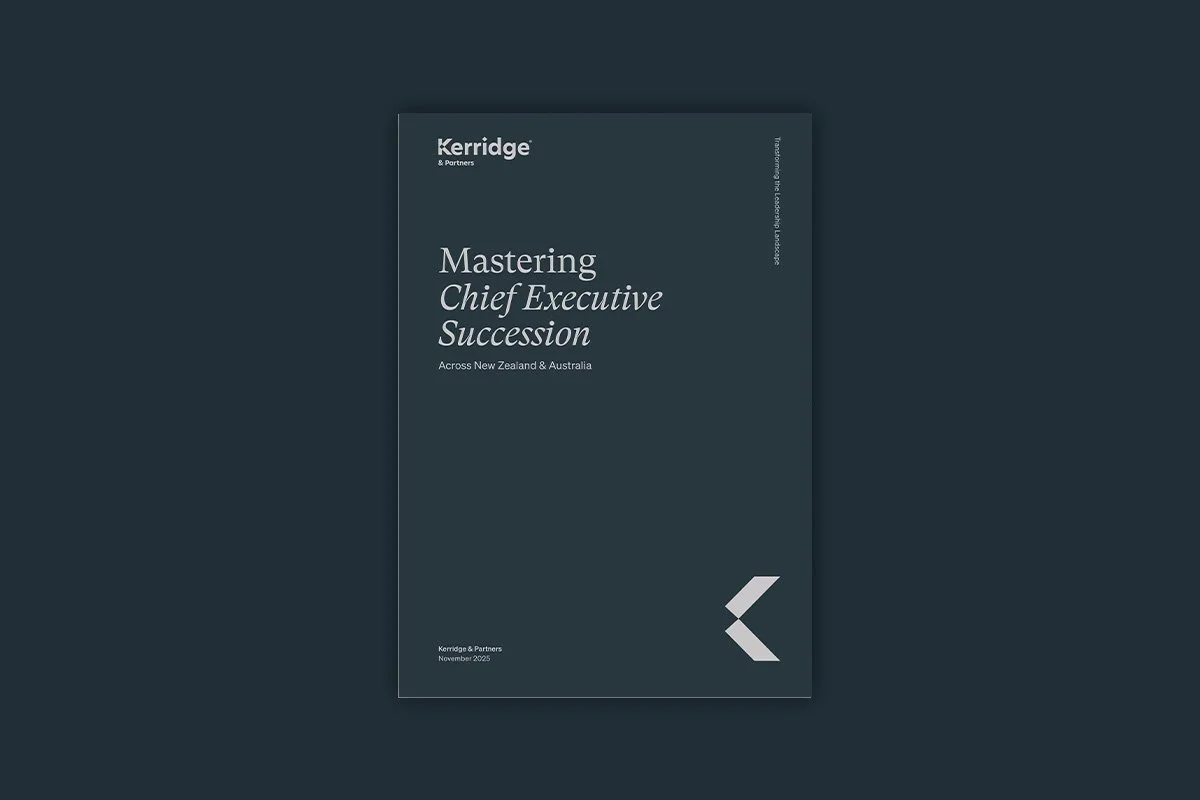
CEO & Executive Succession
Succession should begin before a vacancy forces the conversation.
CEO and executive succession planning gives boards a realistic view of leadership readiness before a transition becomes urgent. Kerridge & Partners helps boards and executive teams assess internal potential, understand external benchmarks and make informed decisions about the leadership their organisation will need next.

What we do
Succession planning at the CEO and executive level is one of the most important, and most frequently deferred, responsibilities a board carries.
When succession planning delayed, a high-stakes leadership decision can become an urgent response to a departure, rather than a considered plan for the future.
We work with boards and executive teams to build succession frameworks that are practical and genuinely useful — not documents that sit in a drawer. The work provides a clear view of the organisation’s leadership pipeline, the readiness of potential successors and the gaps that need to be addressed.
Unlike a CEO or executive search, which is focused on appointing a leader into a defined role, succession planning looks ahead. It considers how the organisation’s strategy, context and leadership requirements may change, then assesses internal candidates against that future need.
Where relevant, we benchmark internally identified candidates against the external market. This gives boards an objective view of succession readiness, clear development priorities for internal candidates and a practical plan for managing any gaps.
Who we work with
This work is for boards that want to move beyond a basic emergency succession plan to a more thoughtful, forward-looking approach to leadership continuity.
It is particularly relevant where a known transition is approaching: a planned retirement, contract end or strategic shift that will demand different leadership. It can also be valuable when no immediate departure is expected, but the board wants a clearer understanding of its leadership depth and preparedness.
We often work with organisations that have strong internal candidates and want an independent view of their readiness for a larger or different role. Internal experience and current performance matter, but neither alone answers whether someone is ready for the leadership challenge ahead.
These processes require sound judgement, discretion and clear boundaries. The board needs an honest assessment, while candidates need to understand the purpose of the process and receive feedback in a constructive way.

Our approach to CEO & Executive Succession
Assess today’s talent against tomorrow’s leadership challenge.
Understand what the future requires
We begin by understanding the organisation’s strategic direction and the context in which future leaders will need to operate. This includes the challenges ahead, the changes likely to shape the role and what effective leadership will need to look like in the organisation’s next phase.
Set a future-oriented benchmark
We define the benchmark against which potential successors will be considered. This is not based solely on the demands of the role today. It reflects the capability, leadership character and potential required to lead successfully in the context the organisation is moving towards.
Assess potential, not simply performance
We assess internal candidates against that future benchmark, distinguishing strong performance in a current role from readiness to step into a larger or different leadership challenge. The process identifies individual strengths, development priorities and the realistic level of succession readiness.
Test the picture and plan for gaps
Where relevant, we benchmark internal candidates against the external market to give the board a grounded view of its options. We then provide clear recommendations on development, timing and how to manage any gaps in the leadership pipeline.

Common questions about CEO & Executive Succession
What does a CEO succession planning process involve?
A CEO succession planning process begins with the organisation’s strategic direction and the leadership it will need in the future. It includes assessing internal candidates against a future-oriented benchmark, identifying development priorities and, where relevant, benchmarking internal capability against the external market.
-
Succession planning looks forward, not backward. A performance review considers how someone has performed in their current role. Succession planning considers whether they have the potential and capability to step into a larger role in a different context — often one that does not yet exist.
-
It is particularly important when a known transition is approaching, such as a planned retirement, contract end or strategic pivot. It can also be valuable well before a transition is expected, when the board wants to understand the strength of its leadership pipeline and move beyond an emergency succession plan.
-
Carefully and with clear boundaries. We are transparent with candidates about the purpose of the process and treat every conversation with discretion. Boards receive our assessment, while individual feedback is handled separately and constructively.
-
Where relevant, external benchmarking gives the board an objective view of internal succession readiness. It helps distinguish between candidates who are ready now, those with longer-term potential and situations where the organisation may need to consider external options.
Succession is easier to strengthen before it becomes urgent.
Whether a leadership transition is known or the board simply needs a clearer view of its succession readiness, a confidential conversation can help determine the right starting point.


Whether you are planning a leadership transition, replacing an incumbent, or considering future leadership requirements, we welcome a confidential conversation.
⬥ Discuss Your Succession Plan
Related Insights
Insights, perspectives, and conversations shaping the future of leadership, executive search, succession, and governance across New Zealand and Australia.